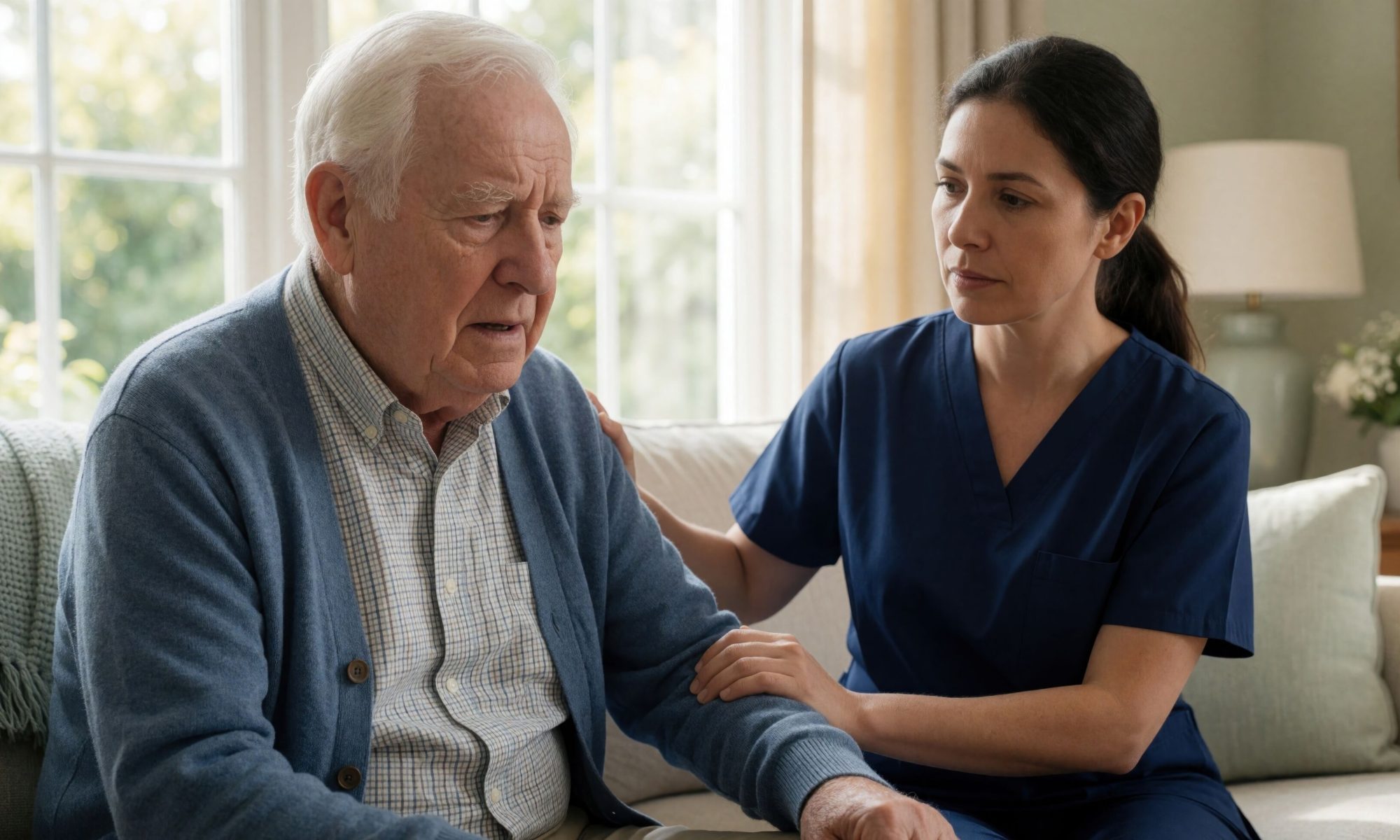
Nonverbal communication in late-stage dementia home care relies on touch, facial expression, tone of voice, and body language to maintain connection once verbal language fades. Caregivers can interpret comfort, distress, and recognition through subtle physical cues rather than words. These techniques can preserve dignity and emotional bonds in the final stages of dementia.
As dementia progresses, spoken language often becomes limited or disappears entirely, but connection doesn’t have to end with it. Caregivers who learn to read facial expressions, touch, and body language can continue building trust and comfort with their senior loved ones. This guide breaks down practical nonverbal strategies for home care during late-stage dementia.
What Does Nonverbal Communication Look Like in Late-Stage Dementia?
In late-stage dementia, communication shifts from words to physical and emotional signals. Seniors may no longer speak in full sentences or at all, but they still express themselves through:
- Facial expressions like smiling, grimacing, or widening eyes
- Body posture, such as leaning toward or away from someone
- Hand movements or reaching gestures
- Eye contact or the lack of it
- Vocal sounds that aren’t full words, like humming or sighing
Recognizing these signals as intentional communication rather than random behavior is the first step toward meaningful connection.
One of the most challenging tasks of helping an elderly relative age in place safely and comfortably is researching agencies that provide the best Huntsville senior home care. You can turn to Home Care Assistance for reliable, high-quality in-home care for aging adults. We offer 24-hour live-in care for seniors who require extensive assistance, and we also offer respite care for family caregivers who need a break from their caregiving duties.
How Can Touch Support Connection in Late-Stage Dementia?
Touch becomes one of the most reliable ways to communicate safety and affection when words are gone. A gentle hand on the shoulder, holding hands, or a soft touch on the arm can convey warmth without overwhelming the senses.
- Approach from the front so your loved one can see you coming.
- Use slow, gentle movements rather than sudden touch.
- Watch for signs of comfort (relaxed muscles, leaning in) versus discomfort (flinching, pulling away).
- Hand massages or brushing hair can be soothing, repetitive touch activities.
Touch should always be introduced gradually, giving your loved one time to register and respond to contact.
What Role Does Tone of Voice Play when Words Are Gone?
Even when seniors with late-stage dementia can’t process the meaning of words, they often still respond to tone, pitch, and rhythm. A calm, warm voice can soothe anxiety, while a rushed or sharp tone may cause distress, regardless of what’s actually being said.
- Speak slowly and keep your tone low and steady.
- Use short phrases paired with gentle facial expressions.
- Sing familiar songs or hum tunes your loved one may recognize.
- Avoid talking about your loved one as if he or she isn’t in the room.
Consistency in tone creates a sense of predictability and safety, which is especially valuable when verbal understanding is limited.
Even when families have the best intentions, caring for a senior loved one with dementia can be challenging. Fortunately, Home Care Assistance is here to help. We’re a leading provider of dementia home care that offers Huntsville families much-needed peace of mind. Families can take advantage of our flexible and customizable care plans, and our caregivers always stay up to date on the latest developments in senior care.
How Can Caregivers Read Facial Expressions and Body Language?
Facial expressions and posture often reveal comfort, pain, or emotional needs before any other sign appears. Learning to observe these cues closely allows caregivers to respond before distress escalates.
- A furrowed brow or clenched jaw may signal pain or discomfort.
- Wide eyes or rigid posture can indicate fear or confusion.
- A relaxed face and open posture usually reflect calm or contentment.
- Repetitive movements, like rubbing hands, may signal anxiety or a need for reassurance.
Documenting these patterns over time can help you identify what specific expressions typically mean for your loved one.
What Are Simple Ways to Create Moments of Connection Daily?
Small sensory-based moments often mean more than structured conversation at this stage. Consistency and familiarity can help your loved one feel grounded, even without verbal exchange.
- Play familiar music from earlier decades of your loved one’s life.
- Use favorite scents like lavender or a familiar perfume.
- Look at old photographs together, focusing on your tone rather than detailed explanations.
- Maintain eye contact and smile often, mirroring positive expressions back to your loved one.
These small rituals, repeated daily, can become a nonverbal language of their own between you and your loved one.
Certain age-related conditions can make it more challenging for seniors to age in place safely and comfortably, but top-rated Huntsville 24-hour home care experts are available around the clock to help northern Alabama seniors manage their health. Whether your loved one is living with dementia or recovering from a stroke, you can trust the professional 24-hour caregivers from Home Care Assistance to enhance his or her quality of life. Call one of our friendly Care Managers to learn about ways our experienced caregivers can help your loved one
Frequently Asked Questions
Can someone with late-stage dementia still recognize loved ones?
+
Many people retain emotional recognition of familiar faces, voices, and touch even after they lose the ability to recall names or specific relationships.
Is it normal for a person with late-stage dementia to stop speaking entirely?
+
Yes, the loss of verbal language is a common and expected part of late-stage dementia progression.
How do I know if my loved one is in pain if he or she can’t tell me?
+
Watch for nonverbal cues like grimacing, tense posture, restlessness, or changes in vocal sounds, as these often indicate discomfort.
Should I keep talking to my loved one even if he or she doesn’t respond?
+
Yes, continuing to speak in a calm, warm tone provides comfort and maintains a sense of connection, even without a verbal response.
Can music really make a difference in late-stage dementia care?
+
Familiar music can trigger emotional recognition and calm agitation, even when other forms of communication no longer register.